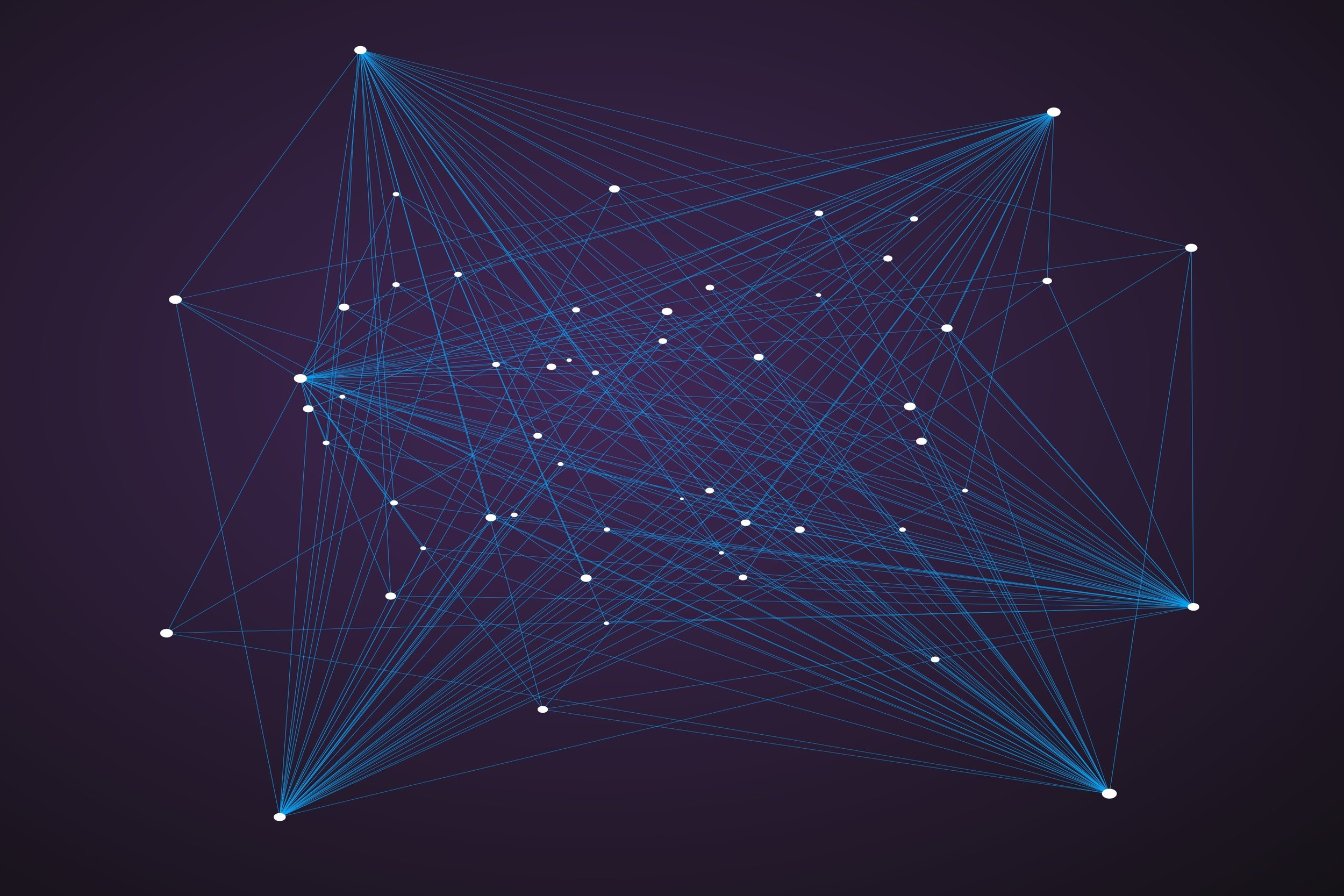
Emergence refers to the existence or formation of collective behaviors — what parts of a system do together that they would not do alone.
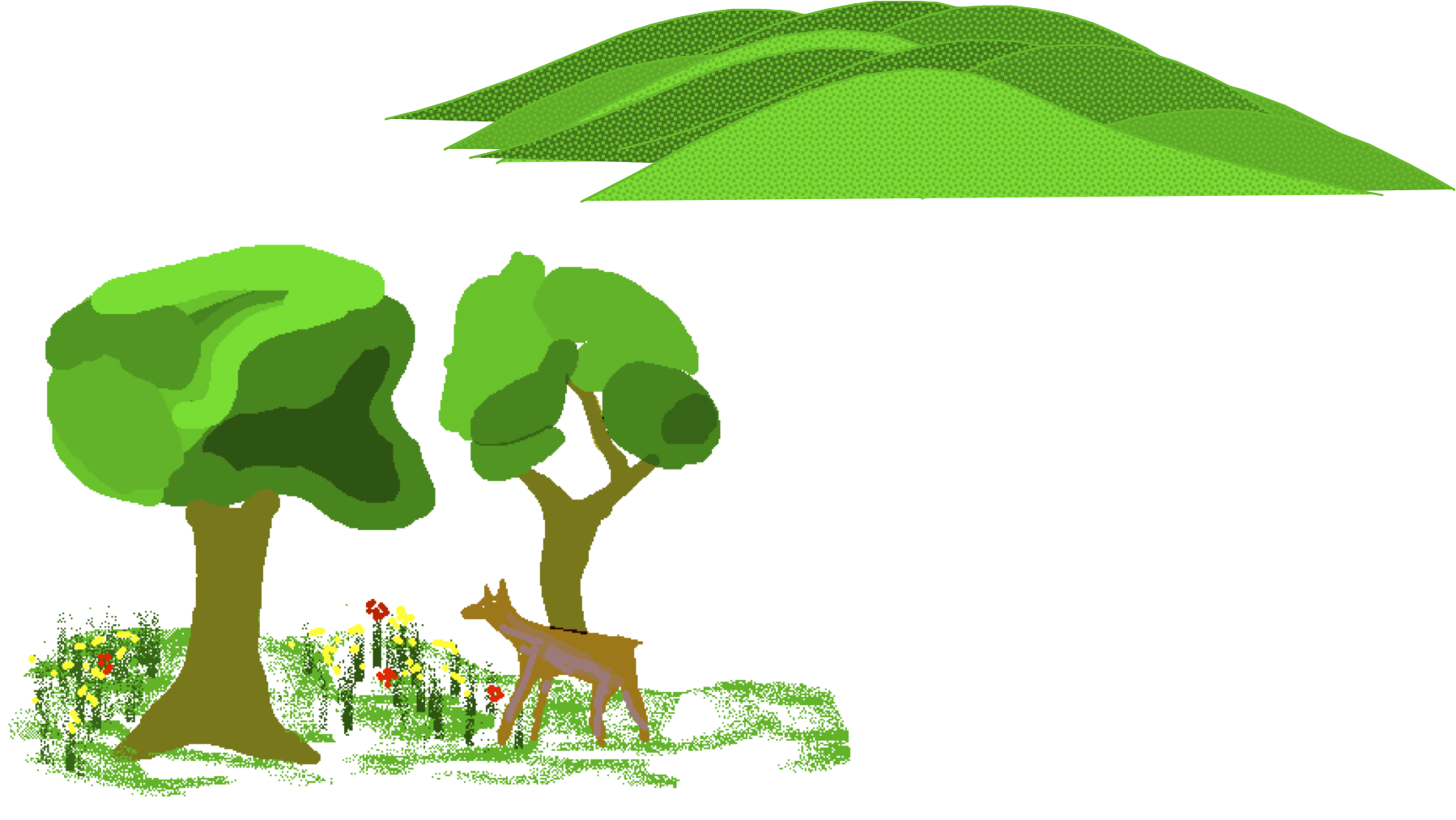
In describing collective behaviors, emergence refers to how collective properties arise from the properties of parts, how behavior at a larger scale arises from the detailed structure, behavior and relationships at a finer scale. For example, cells that make up a muscle display the emergent property of working together to produce the muscle's overall structure and movement. A water molecule has emergent properties that arise out of the properties of oxygen and hydrogen atoms. Many water molecules together form river flows and ocean waves. Trees, other plants and animals form a forest.
When we think about emergence we are, in our mind's eye, moving among views at different scales. We see the trees and the forest at the same time, in order to see how the trees and the forest are related to each other. We might consider particularly those details of the trees that are important in giving rise to the behavior of the forest.
In conventional views the observer considers either the trees or the forest. Those who consider the trees consider the details to be essential and do not see the patterns that arise when considering trees in the context of the forest. Those who consider the forest do not see the details. When one can shift back and forth between seeing the trees and the forest one also sees which aspects of the trees are relevant to the description of the forest. Understanding this relationship in general is the study of emergence.
Emergence can also describe a system's function — what the system does by virtue of its relationship to its environment that it would not do by itself.
In describing function, emergence suggests that there are properties that we associate with a system that are actually properties of the relationship between a system and its environment.
Consider a key. A description of a key's structure is not enough to show us that it can open a door. To know whether the key can open a door, we need descriptions of both the structure of the key and the structure of the lock. However, we can tell someone that the function of the key is to unlock the door without providing a detailed description of either.
One of the problems in thinking about complex systems is that we often assign properties to a system that are actually properties of a relationship between the system and its environment. We do this for simplicity, because when the environment does not change, we need only describe the system, and not the environment, in order to describe the relationship. The relationship is often implicit in how we describe the system.
The concept of emergence as referring to function in an environment is related to the concept of emergence as the rise of collective behaviors, because any system can be viewed along with the parts of its environment as together forming a larger system. The collective behaviors due to the relationships of the larger system's parts reflect the relationships of the original system and its environment.
Both understandings of emergence have to do with relationships: the relationships among the parts, or the relationship of the system to its environment. Parts of a system that are related are also often referred to as a network. A system within the larger system of which it is a part are sometimes referred to as an ecosystem.
The perspective that considers emergence is often contrasted with a reductionist perspective, which thinks about parts in isolation. Reductionism is the often vilified "anti-complex systems" view of the world. The concept of a system is itself based upon a limited form of reductionism that distinguishes the system from its environment, and the parts of a system from each other. The key difference is that the non-reductionist approach considers the relationships among them.
Related concepts: reductionist, interdependence, relationship, elements, complexity, patterns, interactions, scale.
Copyright © 2011 Yaneer Bar-Yam All rights reserved.
Emergence: Seeing the forest and the trees